-

Tetti ad Avero - Edoardo Bricchetti
-

Edilizia in pietra - Sabrina Basilico
-

Particolare di tetto in piòte - Maria Beatrice Servi
-

Architetture in pietra a San Sisto - Maria Beatrice Servi
-
2011


2012


Stone roofs in the Alpine buildings
(tecc de piòte (piöde))
The piòte (this term derives from the lombard dialect pioda, piöda -in val Taleggio- and corresponds to the word slab) are stone sheets made from blocks of gneiss, layers of stone that have the peculiarity of being very easy to divide (schist), with a hammer and chisel, into sheets that are ideal roof coverings. For this use application also the green quartzite of Spluga is sometimes used, however it is rare and mostly applied to decorative and sculptural elements (gates and portals).
Stone roof covering optimises the principles of the alpine economy which are: the low cost, the durability of the roof, the uncomplicated extraction of the stone, the minimisation of the material's transportation (the extraction takes place in loco), the resistance to the cold and any violent impact. The economical aspect is backed up by esthetical reasons, not enunciated but obvious, related to the integration in the landscape.
For centuries and centuries building in the high mountains utilised local stones. When buildings collapsed they were rebuilt on the same spot re-using the same stones.
In val San Giacomo the walls were made of gravel from the bed of the rivers (giavére), whilst the piòte were extracted from the quarries.
From a sustainable point of view, the impact of the quarries must be considered, however it is positive that the stones are extracted manually with hammer and chisel, which diminishes the environmental impact.
The piòte are placed on rafters. These are formed by aged wood, approximately 2.5 centimetres thick and provided with snow stopping notches, flashing, and the flue lining for the chimney and lastly hooks for the gutters. This represents the first phase that precedes the covering of the roof with the piòte. Laying the stones starts from the sides of the roof, where a series of piòte is put next to each other horizontally and close knitted, then they are progressively placed so they overlap so that the rainwater is channelled towards the drainpipes.
The standard made piòte have a legth of 50 cm and a width that varies from 20 to 40 cm. The thickness today goes from 1-1.5 cm, proportionally to the dimensions, and the weight ranges between 60 kilograms and 90 kilograms. The dimension of the stones decreases gradually towards the ridge of the roof. They are nailed to the rafters.
There are three principal laying methods: the course, semi-course and mosaic. The first one consists in laying the stone tiles neatly lined up horizontally and overlapped until the ridge, with tiles gradually smaller towards the ridge. The second method is less precise; the roof builder lays the tiles without measuring or in a specific order. The tile courses result irregular and this asymmetry can result in a very pleasant sight. The mosaic system, the most traditional of the three, applies tiles of different dimensions (up to 80 cm length), laid totally at random. The latter 2 methods prevail in the alpine buildings, where irregular and transversal courses attribute uniqueness and originality to this typical roof underlining the beauty of the stone itself. This is juxtaposed from any other method of laying tiles or other materials which normally aim to strengthen the architectural regularity.
Another positive side of the stone is its possibility to be reused in case of refurbishment or if the buildings have to be extended.
The number of piòte that can be reused depends obviously from their condition; the ones that are century old may be subject to breaking easily both due to the age and to unskilled builders, however the durability of this stone is notable and the quantity of stones that break is very little.
The reconditioned and reused piòte normally are applied with the semi-course technique, unless they are carefully measured beforehand and applied with the "courses" technique. The missing piòte obviously are substituted with intact ones.
The routine maintenance of a stone covered roof doesn't require much effort, and will focus on pipes and drains rather than on the roof stone tiles.
More care will be directed to the buildings in proximity of woods, were the roof can risk rotting due to deposits of leaves and pine needles. To avoid this, the roofs have to be kept clear from the aforementioned, by using brooms with stiff bristle or compressed air.
Given the high number of piòte used in covering a roof, it might occur that a few could break and need substituting. This is only a remote possibility but it might happen: some stones can be originally faulty or by some accidental causes during transport, or because of overload (by the builder standing on the roof). On the other hand, breakage caused by the ageing of the stone tile is a long process, the tiles are very durable and the breakage represents the last stage of their lives. They are not fixable and are quite easily substituted, utilising another pioda of the exact same dimension but obviously intact.
The considerable weight of the stone sheets contributes to fixing the covering to the structure. Only in recent times, contemporarily with the trend to adapt and reuse lofts, there is a tendency to fix the covering to the rafters with nails and consequently laying thinner stone tiles.
NOTIZIE STORICO-CRITICHE
Stone roof covering, a very ancient practice, had its peak during medieval times, the Renaissance and the post war periods, when building materials were scarce.
In the mountain regions, the application of stone as roof covering was favoured by the facility to find the material, this resulted in the use of it for centuries and it became a feature of the landscape.
Gable roofs with generous overhangs and supported by strong wooden structures are par excellence the roofs of the Alps and of many areas of the Appenino mountain chain, in opposition to the Mediterranean traditional roof terraces and dome roofs. The contrast between building techniques of these areas is not so evident when examining the external walls which presents similarities in their construction.
APPRENDIMENTO E TRASMISSIONE
There is a lot of literature about the construction techniques of the mountain house as well as training in vocational schools. For such specific skills however the experience on site and the learning from the experts is still valid and it is passed on by a few people still able to build a roof with piote as in the ancient practice. There is also some technical support on the internet that guides DIY, which is favoured by the new generations.
COMUNITÀ
Talking about this type of construction, the community is formed by the homeowners and private workers of the sector on one hand, and with the government bodies and regulations on the other hand. The sensitivity towards the value of a traditional architecture in the valley is varied and strictly dependant on the housing market, above all in regards to tourism.
Beni immateriali collegati
'Càrden' buildings in Val San Giacomo
Lavorazione di suppellettili in pietra ollare a Piuro
Stone quarry workers in Isola di Madesimo and Splughetta
Per sapere di più
Siti web
A cura di
Politecnico di Milano - Dipartimento di Progettazione dell'Architettura - Fulvia Premoli
Supervisore scientifico
Fulvia Premoli
Data di pubblicazione
19-SET-2013 (Fulvia Premoli)
Ultimo aggiornamento
19-SET-2013 (Fulvia Premoli)
Tweet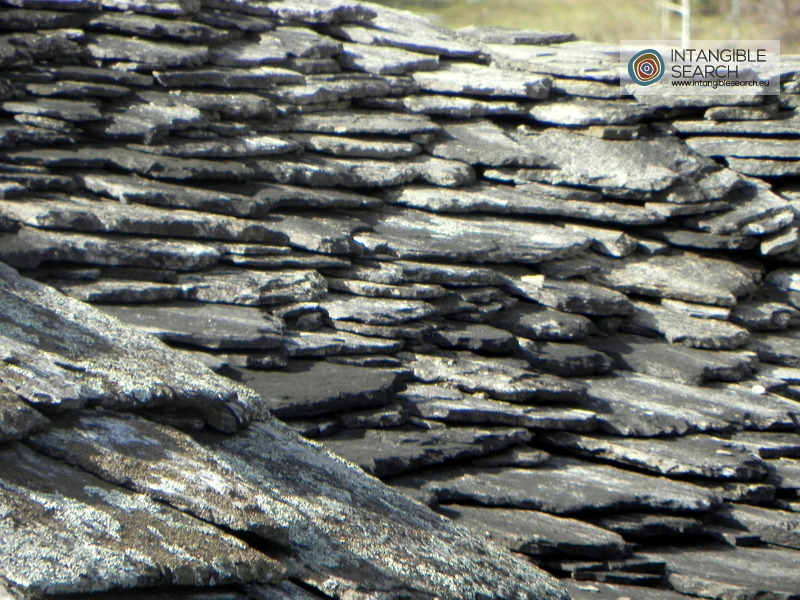
Dalla Community
Racconta